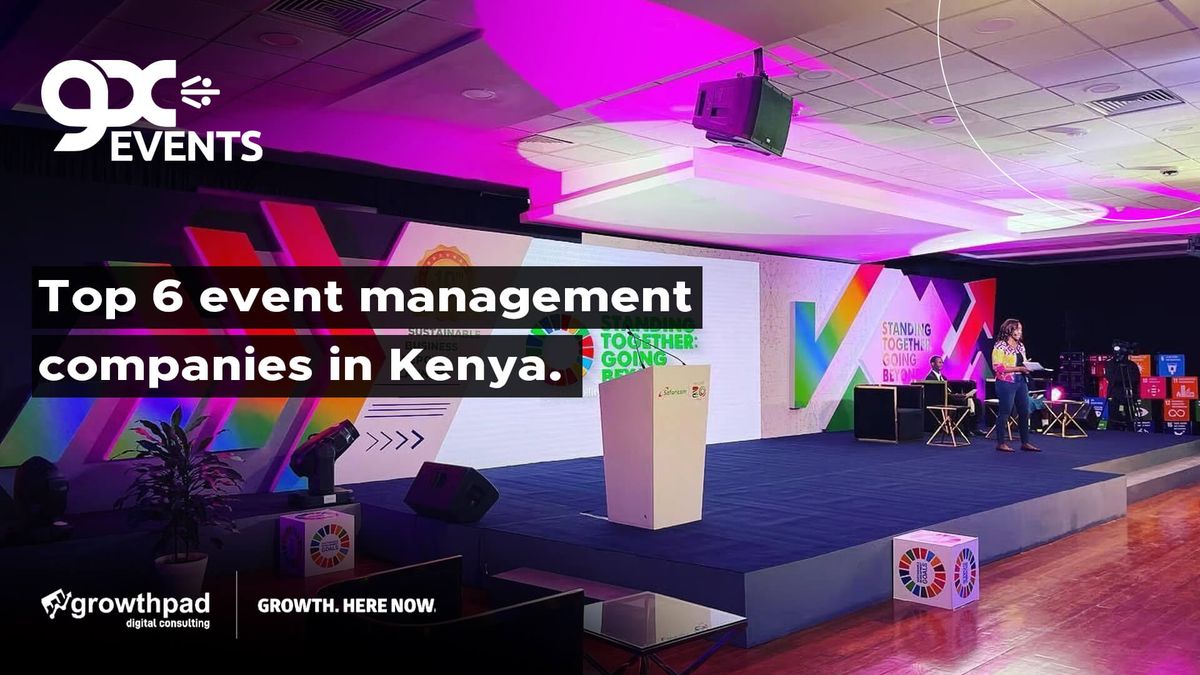
Choosing from the many event management companies in Kenya involves more than comparing venues, décor and suppliers. Corporate events now require careful coordination across strategy, delegate experience, production, technology, communication and measurement.
A successful event starts with a clear objective and a plan that connects the audience, programme and logistics. Our guide on planning a successful corporate event in Kenya covers some of these considerations in more detail.
Event organisers should also account for responsible handling of attendee information, particularly where registration systems collect personal data, in line with guidance from Kenya’s Office of the Data Protection Commissioner.
This guide looks at what to consider when choosing an event planning company in Kenya and some of the providers organisations can consider for corporate events, conferences and summits.
Factors to consider before hiring corporate event management companies in Kenya
A good event planning company in Kenya should be able to move from strategy to detailed execution without losing sight of the event objective. Before requesting proposals, clarify the following.
Strong conference planning capability in Kenya is especially important for summits and institutional events where speakers, protocol, delegates, production and multiple stakeholder groups must be coordinated at the same time.
1. Determine the objective of your corporate event
Start with the reason for holding the event. Is the objective to generate leads, convene stakeholders, launch a product, share knowledge, influence policy, recognise employees, build partnerships or strengthen customer relationships?
The objective should shape the format, audience, programme, venue, speakers, communications and measurement.
2. Determine your reason for hiring an event planner
- Define what you expect the external partner to own. The scope may include:
- Event strategy and concept development
- Venue sourcing and contracting
- Budget and supplier management
- Registration and delegate management
- Programme, speaker and stakeholder coordination
- Stage, sound, lighting and event production Kenya requirements
- Branding, content and event communications
- Security, protocol and VVIP management
- Livestreaming and hybrid events Kenya delivery
- Photography, video and post-event content
- Measurement, reporting and event ROI
Clear ownership reduces duplication between the internal team, agency, venue and suppliers.
3. Estimate a budget

Event budgets should reflect the objective, scale, delegate profile and production requirements.
Major cost drivers include venue, catering, staging, audiovisual production, branding, transport, accommodation, interpretation, security, technology, staffing and content production.
Build a contingency line into the budget rather than treating every shilling as committed from day one. Large conferences and multi-market events almost always require some flexibility.
4. Source a qualified event planner

Look for an agency with evidence that matches your event type and level of complexity.
A strong corporate partner should be able to show recent conferences, summits, product launches, stakeholder events or institutional assignments of similar scale.
Also evaluate supplier networks, project-management discipline, audiovisual capability, delegate systems and the ability to operate across your required locations. For larger regional events, the Africa event management company checklist covers multi-country planning in more depth.
5. Meet your planners in person if possible

Do not assess only the sales pitch. Confirm the project manager, production lead and other key people who will be assigned to the event. Ask how decisions, approvals, budget changes and emergencies will be handled.
A good chemistry check is still useful, but the more important question is whether the team has a clear operating system for delivery.
6. Check references, case studies and current capacity
Ask for recent client references, not only a list of logos. Where possible, confirm the type of event, scope handled, audience size, challenges and results. Also check whether the agency has enough capacity during your event period, particularly if multiple high-profile events are happening at the same time.
7. Review event technology and data handling
Event technology is now part of the delegate experience. Registration portals, event apps, QR check-in, livestreaming, digital agendas, feedback tools and analytics can make an event easier to manage and measure.
If attendee information is being collected, ask how personal data is stored, accessed and protected. Registration should collect only what is necessary, and the event team should understand consent and privacy requirements.
8. Ask how success will be measured
Attendance is not the only outcome. Depending on the event, useful measures may include stakeholder participation, session engagement, feedback, leads, partnerships, commitments, media reach, content performance, sponsorship value or post-event actions.
For a more detailed framework, see Event ROI in Africa.
Top 5 event management companies in Kenya
Now that you know a few things to consider before hiring an event planner, here is a list of the event companies in Kenya, preferably in Nairobi that you should look to hire soon.
1. GDC Events
GDC Events is a Nairobi-based corporate-events company specialising in strategic planning and production for in-person, virtual and hybrid events. Its current service positioning includes conferences, product launches, exhibitions, awards, sales meetings, media events, galas, employee experiences and consumer events.
The company is especially relevant for organisations looking for an integrated partner across planning, production, event technology, branding, multimedia and corporate-event execution. GDC Events is based in Westlands, Nairobi.
2. Stawi Experiences
Stawi Experiences provides 360-degree event management, event engagement, scenic design, team experiences and event technology. Its current offering includes planning and execution, an event application, registration support, audience engagement, content and production.
Stawi may be particularly relevant where the event objective depends on participation, internal engagement or interactive delegate experiences. Stawi Experiences operates from Nairobi.
3. CMEM Group
CMEM Group, also known as Centro Marketing Events and Media Group, offers end-to-end event management across Kenya and East Africa. Its public services include planning, technical production, coordination, branding, roadshows, activations and related marketing execution.
The company is relevant for corporate, government and institutional events that need event management combined with broader experiential or activation capabilities. See CMEM Group events management.
4. MediaForce Communications
MediaForce Communications is a Nairobi-based communications and digital-services company with event-management capability. Current third-party listings show event management among its services and reference experience with virtual conference delivery alongside web development, video and digital marketing.
It may suit organisations that need event delivery connected to digital communication, content or online-experience requirements.
5. Starlinks Events Services Company
Starlinks Events Services Company is listed as a Nairobi-based provider focused on event management and event marketing. Organisations considering the company should request recent case studies, current service details and references to confirm fit for the specific scale and format of the event.
What Services Should A Corporate Event Management Company Provide?
The exact scope depends on the event, but a full-service corporate event management Kenya partner may provide:
- Event strategy and programme planning
- Venue sourcing and supplier coordination
- Budget management and procurement support
- Registration and delegate communication
- Stage, lighting, sound and audiovisual production
- Speaker, moderator and stakeholder coordination
- Branding, signage and environmental design
- Transport, accommodation and hospitality
- VVIP protocol and security coordination
- Livestreaming and hybrid-event production
- Photography, video and social content
- Feedback, analytics and post-event reporting
What Has Changed In Corporate Events In Kenya?
The fundamentals of planning are the same, but the expectations around delivery have become more demanding.
Events need a clearer business or institutional outcome. Boards, sponsors and donors increasingly want to know what the event achieved, not only how many people attended.
Hybrid capability is now part of the risk plan. Even primarily physical events may need remote speakers, livestreaming or digital participation options.
Delegate experience starts before arrival. Registration, confirmation messages, travel information, mobile access and clear agendas all shape perception before the event begins.
Event data has strategic value. Registration, attendance, feedback and engagement data can inform future events, stakeholder management and follow-up.
Accessibility and inclusion matter more. Venue access, interpretation, captions, clear signage, dietary needs and inclusive programme design should be considered early.
Content lives beyond the event day. Photography, video, interviews, session clips, reports and social content can extend the value of the event long after the venue closes.
Frequently Asked Questions
What does an event management company do?
An event management company can handle strategy, planning, budgeting, suppliers, venues, registration, delegate communication, production, logistics, branding, technology, on-site coordination and post-event reporting.
How do I choose an event management company in Kenya?
Start with relevant experience. Compare companies on similar event types, project-management discipline, production capability, supplier networks, delegate systems, risk planning, references and the clarity of their proposal.
How much does event management cost in Kenya?
There is no fixed cost. The final budget depends on venue, delegate numbers, duration, production, catering, transport, branding, technology, security, accommodation and the level of agency support required.
What should be included in an event brief?
Include the event objective, audience, date, location, format, expected delegate numbers, programme needs, production requirements, branding, technology, VVIP requirements, budget range and success measures.
What is the difference between event planning and event management?
Planning focuses on defining and organising the event before it happens. Event management includes planning but also covers coordination, supplier control, production, on-site execution, issue management and post-event reporting.
How should event ROI be measured?
Start with the objective. Depending on the event, measure costs, attendance, priority stakeholder participation, engagement, feedback, leads, partnerships, commitments, media value and longer-term actions that happened because the event took place.
Bottom line
Choosing the right event partner can take much of the pressure out of planning and delivering a successful corporate event.
The event management companies in Kenya covered in this guide offer different capabilities, so the right choice should come down to your event objectives, budget, audience and production requirements.
If GDC Events fits what you are looking for, you can contact the team for your corporate event needs on +254 701 850 850 or via strategic@gdcevents.co.ke.